
North Carolina Radon Program

Radon Mitigation Course - September 2026
This training is sponsored by NCDHHS' Division of Health Service Regulation, Radiation Protection Section.
This course is designed to help you achieve an Entry-Level Radon Mitigation Specialist certification. For more information, please email radoncourse@ksu.edu.
- Location: Statesville, North Carolina
- Dates: September 21-23, 2026 (must attend all three days)
- Time: 8 a.m. to 5 p.m. each day
- Cost: $400 for North Carolina residents (originally $600) for the first ten registrations.
To register, please visit Kansas State University's registration page.
Limited Discount: The first 10 North Carolina residents to register will receive $200 off the Entry-Level Radon Mitigation Specialist Course.
Required Prerequisite: The Entry-Level Radon Measurement Professional course is a required prerequisite and must be completed before the in-person mitigation course
Haven't take a Radon measurement course? Register for our online Entry-Level Radon Measurement Professional course on Kansas State University's website.
What Radon is and Why It's Harmful
Radon is a colorless, odorless, tasteless and chemically inert radioactive gas. It is formed by the natural radioactive decay of uranium in rock, soil and water. Testing for radon is the only way to know how much is present in a building.
The North Carolina Radon Program is a program of the NC Radiation Protection Section that works to reduce the incidence of radon-induced lung cancer statewide through education.
The purpose of the North Carolina Radon Program is to:
- Increase awareness of the source and health impacts of radon exposure
- Provide resources that assist North Carolinians with testing indoor radon levels
- Empower North Carolinians with information on how to lower radon levels
Radon is the leading cause of lung cancer among non-smokers. An estimated 21,000 people nationally die each year from radon-induced lung cancer. 450 North Carolinians are estimated to die each year due to radon-induced lung cancer.
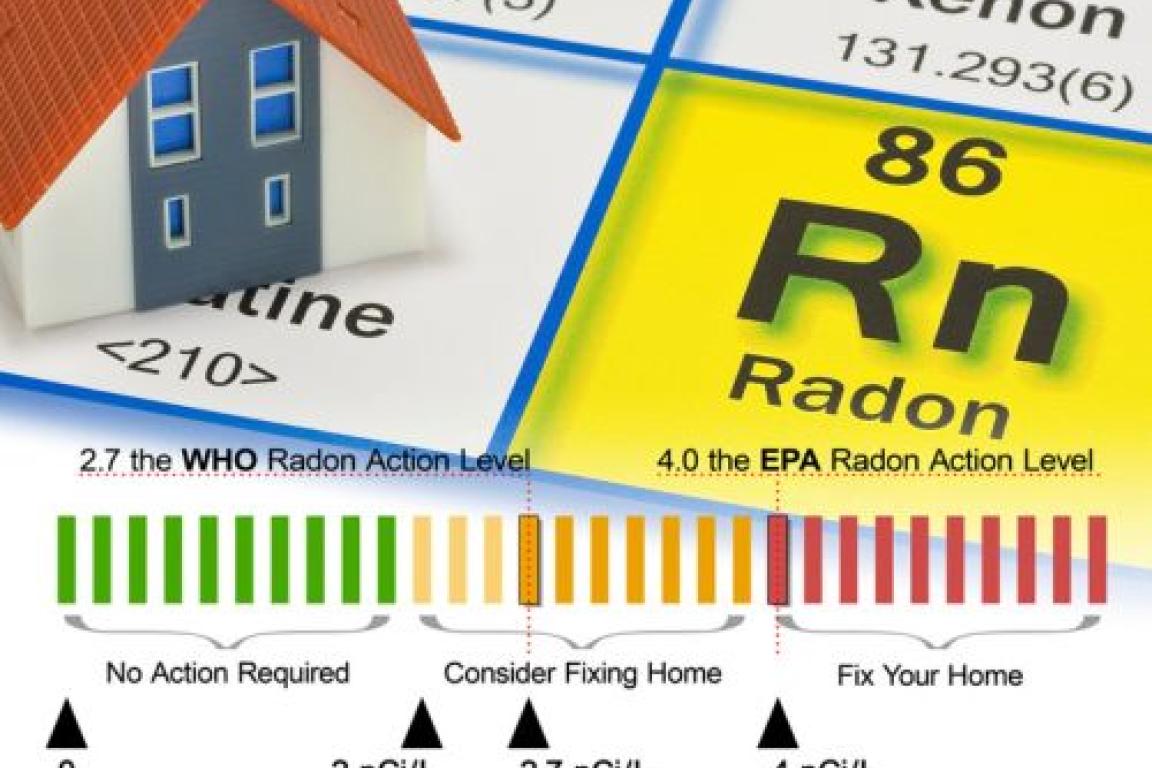
Data provided by the Center for Disease Control and Prevention indicated that 77 of the100 counties in North Carolina have radon indoor air levels above action level of 4 pCi/L.
Reducing the incidence of radon-induced lung cancer is a priority issue of the NC Cancer Control Plan and the NC State Health Improvement Plan.
Radon Awareness Video
This video explains what radon is, why it's harmful, who is most at risk and where to go for the best resources.
The video above is also available in Spanish, Cantonese, Chinese, French, German, Hindi, and American Sign Language.
Order a Radon Test Kit
The NC Radon Program recommends that every home be tested for radon. You can purchase a test kit or hire a certified radon professional. Find test kit instructions in English and Spanish.
- Learn more about digital radon monitors.
- Learn more about testing for radon and mitigation recommendations by county.
Complaints About Radon Testing and Mitigation
If you believe you have been wronged by a radon testing or mitigation company, please report your complaint to the North Carolina Attorney General.
Finance Your Radon Mitigation System
If a medical professional recommends radon mitigation due to it causing a medical condition from being in a home, the cost of mitigation is eligible with a Letter of Medical Necessity and eligible for reimbursement with a flexible spending account, health savings account or a health reimbursement arrangement. Radon mitigation reimbursement is not eligible with a limited-purpose flexible spending account or a dependent care flexible spending account. Check your FSA eligibility.
Proficiency Program Regulations
The North Carolina Radon Program is presently developing a Radon Proficiency Program as directed by Session Law 2023-91 House Bill 782. Please contact Catherine Rosfjord for additional information at: catherine.rosfjord@dhhs.nc.gov.
Frequently Asked Questions
No. Some North Carolina homes have radon mitigation systems that were installed in the 1990s. Radon mitigation fans are generally warrantied for 5 years. The recommendation is to test your home at most every five years, whether or not you have a radon mitigation system. This will help you determine if your system is keeping indoor radon levels low.
Yes. All home types should test for radon. This includes condos, town homes, homes with crawl spaces, homes on a slab, manufactured and modular homes, and apartments.
Probably not. At this time, the EPA does not believe sufficient data exists to conclude that the types of granite commonly used in countertops are significantly increasing indoor radon levels.